

|
Getting your Trinity Audio player ready...
|
As an Asian woman, my first skincare teacher wasn’t a brand it was my mother. Long before “10-step routine” was a phrase anyone used, she had her own version of one, built entirely from what was in the kitchen. Honey and yogurt masks for anything dry or dull. Gram flour as a cleanser, worked into a paste with milk or water. Rice water and rose water as toner, kept in a little bottle by the mirror. There was a home remedy for every complaint and it worked not instantly, but steadily, the way things your grandmother swears by tend to.
So, when a friend handed me a small glass bottle of “essence” years later and told me it was basically a toner, I remember being almost defensive about it. “A toner is rose water,” I thought. “This is just marketing.” But I tried it anyway and it didn’t teach me completely new skincare principles. It gave a modern, trendy version of many of the things my mother had already taught me. The same instincts gentle, hydrating, ingredient-first, patient rather than aggressive dressed up in a glass bottle with a K-beauty label on it.
That’s when it clicked for me: this wasn’t a rejection of the home remedies I grew up with. It was their evolution. And that personal shift from kitchen-cabinet ingredients to lab-refined versions of the same philosophy turns out to be a much bigger story than my own bathroom shelf. It’s a genuine global market shift, and Korea is sitting right at the centre of it.
The Positioning Shift: How Korean Beauty Out-Marketed the Category
To be fair, skincare itself wasn’t new. Clinique, Estée Lauder, and a whole lineage of American and European dermo-cosmetic brands had been selling “healthy skin” for decades before anyone outside Seoul knew what an essence was. But for most of that time, skincare sat quietly next to color cosmetics, useful, but rarely the star of the story. What’s happened in just the past few years is a much bigger, faster shift, and Korean beauty is the clear catalyst behind it.
From where I sit as a marketer, what K-beauty brands got right wasn’t a better cream, it was better positioning. Western skincare had spent decades speaking in clinical, almost intimidating language: retinol percentages, dermatologist endorsements, anti-aging as the end goal. K-beauty brands repositioned skincare as something closer to self-care and ritual approachable, affordable to start, and genuinely enjoyable rather than corrective. They sold the process (the 10-step routine, the glass-bottle aesthetic, the “glass skin” outcome) as much as the product, which made routine-building itself the hook instead of any single hero item. That’s a positioning move, not a formulation one and its exactly why legacy skincare brands, with arguably just as strong a science story, still got outpaced.
The Market Is Moving, and It’s Moving Fast
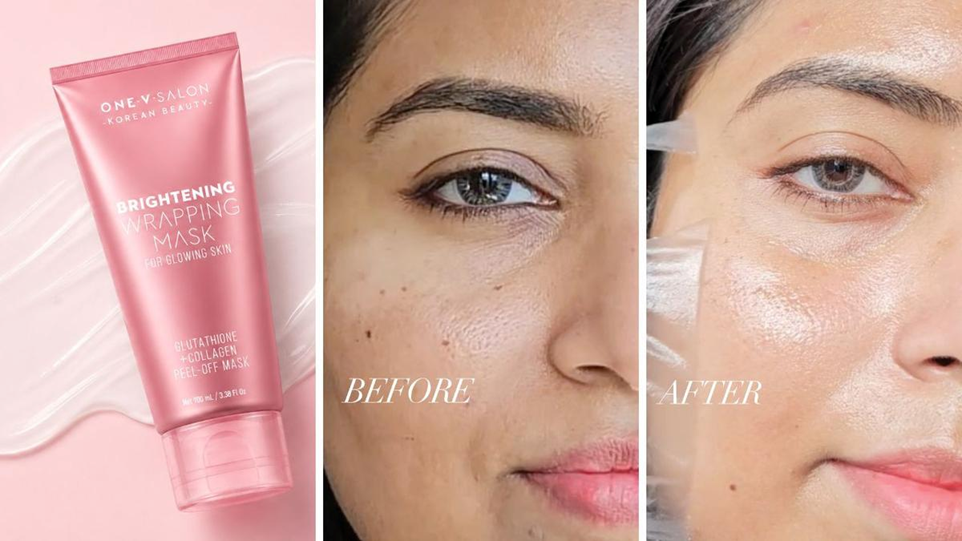
This isn’t just a vibe shift the numbers back it up. Skin care now dominates the K-beauty category, holding well over half the market share, well ahead of color cosmetics. Consumers are voting with their wallets for hydration, barrier repair, and gentle, ingredient-led formulas over heavy coverage.
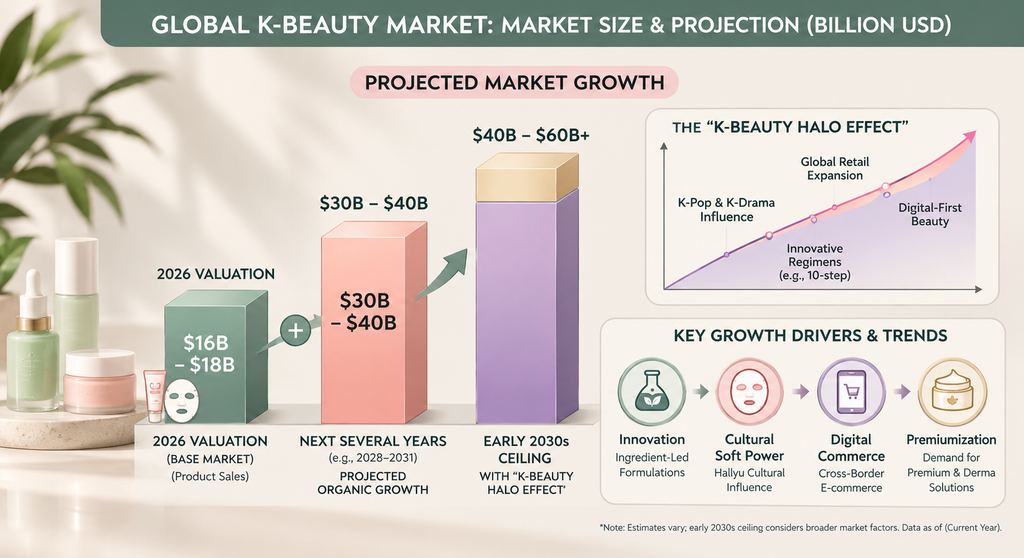
Here’s where it gets interesting for anyone watching the industry rather than just shopping in it. The global K-beauty market was valued at roughly $16- $18 billion in 2026, and multiple analysts project it will climb toward $30- $40 billion within the next several years. Some estimates, factoring in the broader K-beauty halo effect, put the ceiling even higher by the early 2030s. Skincare specifically is projected to keep growing at a strong clip, driven by consumers who now treat their routines less like a beauty ritual and more like preventative healthcare.
Meet the Brands Leading the Shift
If you’ve dipped even a toe into this world, a few names probably ring a bell:
- COSRX– The brand that made snail mucin and low-pH cleansers a household conversation in the West.
- Beauty of Joseon-leaning into traditional Korean herbal ingredients with a modern, minimalist twist.
- Torriden and Anua– Newer favourites built almost entirely on hydration and barrier repair, riding the wave of skinimalism.
- Laneige and Sulwhasoo– The more premium end, proving K-beauty isn’t just an affordable-drugstore story anymore; it has a genuine luxury tier now too.
Why This Shift Actually Matters
What I find most compelling isn’t the product innovation — it’s the mindset shift underneath it. A few years ago, “beauty routine” meant a makeup routine. Now, for a huge number of people, it means a *skin health* routine, with makeup as an optional final layer rather than the main event. That’s a genuinely different relationship with how we think about our faces, and Korea didn’t just participate in that shift — it led it.
Whether you’re a decade-deep skincare obsessive or someone who just wants fewer, better products that actually do something, there’s probably a K-beauty brand that already thought through your exact skin concern — because chances are, they built an entire ten-step routine around it.
What This Means If You’re Building a Beauty Brand
Here’s the part I think about the most, not as a consumer, but as someone who spends her days elbow-deep in market research and brand positioning: this shift isn’t a trend to reference in a caption. It’s a signal that the entire rulebook for how beauty brands win has changed, and it has real implications depending on where you’re standing.
If you already have a cosmetics or makeup-led line:
– Audit your portfolio for what’s actually skin-first versus what’s coverage-first, and be honest about the split. If skincare is 10% of your catalog and 60% of where the market is moving, that gap is your biggest opportunity, not a footnote.
– Look at your ingredient story. Consumers raised on K-beauty now expect to know what’s in a product and why vague claims like “brightening” or “anti-aging” without ingredient transparency read as dated, not aspirational.
– Consider whether your brand voice still centers “hiding flaws.” If it does, that’s worth revisiting — the winning positioning right now is patient, ingredient-led, and skin-health-first, even for brands that started in color cosmetics.
– Don’t ignore the multi-step mindset. A single hero product is harder to build loyalty around than a routine — think about what your “step 2” and “step 3” could be, even if you only sell one product today.
If you’re building a new line from scratch:
– Start with skin philosophy, not shade range. Decide what problem you’re solving — barrier repair, hydration, pigmentation, sensitivity — before you decide what the packaging looks like.
– Study the K-beauty playbook on ingredient storytelling and routine-building; you don’t have to copy it, but you do have to understand why it worked before you try to differentiate from it.
– Price and position deliberately. K-beauty has proven there’s real room at both the affordable and the premium/derma-luxury end decide early which lane you’re building for, because the messaging, packaging, and retail strategy differ sharply between them.
– Build for the routine, not the single sale. Brands that think in terms of “what does this customer need next” are the ones building the kind of repeat-purchase loyalty this category rewards.
The bigger takeaway, whichever side you’re on: the market didn’t just add a new competitor category. It rewrote what “credible” looks like in beauty. Brands that catch up to that in positioning, in research, in how they talk to consumers are the ones that will still be relevant five years from now.
My mother’s remedies still sit somewhere in my routine. I’ll never fully give up rice water. But I’ve made peace with the fact that a glass bottle of essence and a bowl of gram flour paste are chasing the exact same goal. What’s still in your routine from home, and what’s been replaced by something from a Korean skincare shelf? I’d love to hear where you landed.
If you’re a brand, big, small, or still just an idea trying to figure out where you fit into shifts like this one, that’s exactly the kind of work I do: market research, brand positioning, and digital marketing built around where consumers are actually heading, not where the category used to be.